
How Much Movement Does It Take to Make a Door Rub?
Very little. A garage opening that goes a quarter inch out of square across a 16 foot double door is enough to make one side of the door drag on the jamb, leave a wedge of daylight under a bottom corner, or stop the bottom seal from sealing. The door did not change. The concrete and framing around it did.
The vertical tracks are lag-screwed to the wood jambs on each side of the opening. If one jamb drops with the slab, or the header sags in the middle, those two tracks are no longer parallel and no longer plumb. The rollers on one side start riding the edge of the channel instead of the center, the door twists slightly as it travels, and you get scraping at the same spot every cycle.
The gap at the bottom corner is the same problem seen from the driveway. The door's bottom edge is straight. The floor under it is not, at least not anymore. A bulb seal can hide a small difference, but once the wedge reaches half an inch the seal is off the concrete at one end and crushed flat at the other.
Why Fort Bend County Clay Moves Garage Openings
Most of Sugar Land sits on the Beaumont and Lake Charles clay series, soils that swell when wet and shrink when dry. A wet winter followed by a dry August can move the edge of a slab an inch or more, and the 2011 drought, the worst single year on record for Texas, showed how quickly that shrink happens. The series under any address can be confirmed in the Web Soil Survey from the USDA.
Geography makes it worse. The city is flat and sits only about 80 feet above sea level, so water drains slowly and the soil stays saturated long after a storm, then bakes hard through a dry spell. The garage corner of a slab is often the most exposed corner of the whole house. It has a driveway on one side wicking heat, a flowerbed on the other holding water, and frequently a downspout dumping right beside it.
The age of the slab changes how it moves. Post-tensioned slabs, which became the norm for new construction in this region through the 1990s, tend to tilt as a unit. Older conventionally reinforced slabs are more likely to crack and hinge, so one part of the opening drops while the rest stays. Either way, the garage door is usually the first thing in the house to complain, because it is the largest moving part sitting on the most exposed corner.
Is It the Door or the House? A Five Minute Check
Before assuming the worst, rule out the door itself. A dented track, a flat-spotted roller or a bent hinge produces some of the same symptoms. The table splits them apart.
| What you see | Points at the door | Points at the opening |
|---|---|---|
| Daylight under one bottom corner, seal tight at the other | Torn seal or a loose bottom bracket on that side | Slab has dropped at that corner; a 4 foot level on the floor will show it |
| Door scrapes one jamb the whole way up | Track pushed inward by an impact | Jamb leaning; track no longer plumb |
| Gap between door and stop molding grows toward the top | Stop molding shrunk or nailed short | Header sagging or jamb rotated |
| Rubbing began after a long wet spell or a long drought | Unlikely to be the door | Soil movement; check whether interior doors and windows are sticking too |
| Stair-step cracks in the brick near the garage corner | Not a door issue | Active foundation movement; get a foundation inspection |
| Door hesitates at the same height every cycle | Dent in the track or a worn roller at that point | Tracks out of parallel at that height |
Two more checks help. Lay a 4 foot level across the floor just inside the door at both ends. Then stand back and sight along each vertical track from the floor up. A track that leans away from the jamb at the top, or bows in the middle, tells you the framing has moved with it.
What We Do to Fix a Racked Opening
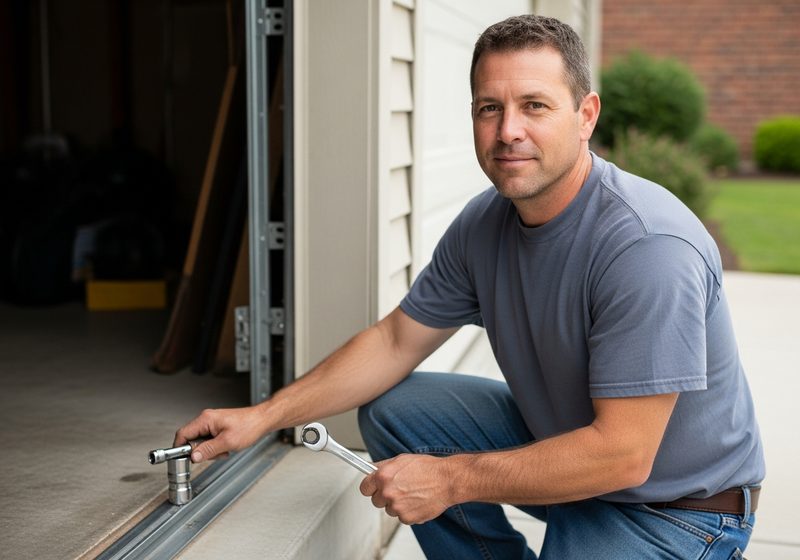
The repair is to reset the door to the opening. We loosen the vertical tracks, plumb them with a level, set the spacing so both rollers ride centered, re-square the horizontal tracks, and adjust the cable drums so the door sits level. Most of these visits take 60 to 90 minutes and cost in the $150 to $350 band.
The details matter more than the list suggests. If one jamb has dropped, the track bracket on that side gets shimmed so the track is plumb again rather than following the wood. If the header has sagged, the stop molding is reset so the weatherstrip touches the door evenly. The cable drums are set so both cables carry equal tension with the door level, which is the step most often skipped when someone just pops the seal down to hide a gap.
The bottom seal is dealt with last. A taller bulb seal will close a small wedge honestly. What we will not do is cram a huge seal under the door to hide an inch of slope, because the opener's down-force then has to crush it every cycle and the auto-reverse starts tripping. If the gap is that large, the floor needs attention. Where the racking has already pulled a roller out, the job becomes an off-track repair, and if a cable has jumped its drum we handle that as part of cable repair.
Door binding or gapping at one corner?
We plumb the tracks to the opening as it is now and level the door on its cables. Firm price before any tools come out.
When to Call a Foundation Company Too
A garage door is a sensitive instrument, and it often reports foundation movement a year or two before anything else does. That said, some signs mean the door is a symptom of a bigger problem. Interior doors that stick or swing on their own, drywall cracks running diagonally from the corners of windows and doorways, brick that has cracked in a stair-step pattern, a gap opening between the brick and the frieze board under the eave, and floors that feel out of level all point past the garage.
In this part of Texas the usual remedy is pressed pilings or drilled piers under the affected edge of the slab. Leveling the house moves the garage opening again, sometimes most of the way back toward square. That is why we suggest sequencing it: foundation first, door second. We can make a temporary track adjustment so the door runs safely while you sort out the bigger job, then do the proper reset once the house has finished settling on its new supports.
Keeping the Opening Stable Between Visits
You cannot stop clay from being clay, but you can even out the swings. The standard Texas advice holds: keep the soil moisture around the slab consistent through the year. A soaker hose laid 12 to 18 inches out from the foundation and run for a short period during dry spells keeps the clay from shrinking away from the slab edge. Extend downspouts so they discharge several feet from the house rather than into the bed beside the garage.
Watch what is planted near that corner. Large trees within about 15 feet of the slab draw a lot of water out of the soil in summer, which is exactly the shrink you are trying to avoid. Beds should drain away from the house, not hold water against it.
Finally, treat the door as the early warning it is. If it starts scraping again after a season of extremes, have the tracks looked at before the rollers wear through and the cables start fraying. Drag on one side is also one of the causes covered in our guide to a door that sticks in humid weather, and the popping and scraping it produces is one of the sources listed in how to quiet a noisy garage door. For the full picture of garage door repair in Sugar Land, from tune-ups to new doors, start at our main page.