
What Humidity Does to Each Material
Just 5 materials cover nearly every residential garage door: steel, aluminum, fiberglass, wood and composite. Humidity attacks each differently. Steel rusts where the zinc coating is cut or scratched, aluminum oxidizes harmlessly but dents, fiberglass chalks and cracks in sun, wood swells and rots at the bottom rail, and composite mostly shrugs it off.
That order of vulnerability matters more here than in most of the country. Sugar Land takes close to 50 inches of rain a year and spends the summer in air that condenses on anything cooler than it is. A garage door faces that on the outside, with a driveway splashing its bottom foot, and sits in an unconditioned garage on the inside. Whatever it is made of, the material gets wet regularly and dries slowly.
Price ranges below are typical installed estimates for a double door in Sugar Land, including removal of the old door, and a firm number always follows a measure.
Side by Side
| Material | Rust or rot | Dents | Insulation | Upkeep | Installed cost | Best for |
|---|---|---|---|---|---|---|
| Galvanized steel | Rusts at cut edges and scratches; the bottom rail first | 24 gauge resists well; 27 gauge dents easily | R-6 to R-18 depending on construction | Low; wash and touch up chips | $1,400 to $3,500 | Most homes |
| Aluminum and full-view glass | No rust; harmless surface oxidation | Dents easily | Low unless insulated glass is specified | Low | Upper end of the steel range and above | Modern elevations, workshops |
| Fiberglass over a steel frame | No rust or rot; yellows and turns brittle with age | Cracks rather than dents | Moderate when insulated | Moderate | Mid to upper range | Wood look without rot; fewer options now |
| Wood | Swells and rots, bottom rail first | Dents and scratches, but repairable | Low unless built with an insulated core | High; refinish every 2 to 3 years | Above the steel range | Custom designs |
| Composite overlay on steel or foam | Resists both | Resists | Good; usually a foam core | Low; wash and repaint when you choose | Upper end of the steel range and above | Carriage house looks |
Steel: Gauge, Galvanizing and Insulation
Residential steel doors run from about 27 gauge to 24 gauge, and a lower number means heavier steel that dents less. A two layer door with polystyrene insulation gives roughly R-6 to R-9, while a three layer door with injected polyurethane reaches R-12 to R-18. In a humid climate, the coating and finish matter as much as the gauge.
The steel arrives galvanized and factory painted, and that combination is what keeps it clean for twenty years. Where it fails is wherever the coating is missing: the cut edge along the bottom rail, the holes drilled for hinges and brackets, and any chip from a bicycle or a trash can. Touch those up when you see them and a steel door lasts. Ignore them and the rust bleed starts, which is the failure pattern we walk through in our guide to rust on garage door hardware.
Insulation does more than the R-value suggests. Polyurethane is injected between the skins and bonds to both, so the section becomes a rigid sandwich that dents less, flexes less in wind and runs quieter. Polystyrene is a cut panel slipped between the skins, lighter and cheaper but not bonded. Either way, the door is only part of the thermal picture. The seals around the perimeter, the joints between sections and the size of the garage all count, and an attached garage door affects the comfort of the rooms beside and above it.
Aluminum and Full-View Glass
Aluminum does not rust. Anodized or powder-coated frames stay clean indefinitely, and a modern full-view door with frosted, tinted or clear glass panels suits the newer brick and stucco elevations going up around the city. It is also heavy, and the weight sits high because glass is dense, so the springs and the opener have to be sized for it rather than reused from the old door.
The drawbacks are practical. Aluminum dents from a bumped bike or a thrown ball and stays dented. Plain aluminum sections offer very little insulation, and glass facing west turns the garage into a greenhouse in July unless the panels are insulated and tinted. For a garage used as a gym or a workshop where daylight matters, those are fair trades. For a garage under a bedroom, think it through.
Fiberglass
Fiberglass doors are a molded skin, usually with a wood-grain texture, bonded to a steel frame or a foam core. They do not rust and they do not rot, which made them popular here for a while as a wood look that could handle the humidity. Their weakness is the sun. Fiberglass chalks, yellows and turns brittle over the years, and a brittle section cracks where a steel one would dent. Fewer manufacturers offer them now because composite overlays do the same job better, but existing fiberglass doors are still worth maintaining rather than replacing early.
Wood and Composite
A real wood door, in cedar, hemlock or a hardwood veneer over a core, is the best looking thing you can hang in a garage opening and the most demanding. Every face has to be sealed, including the top and bottom rails and the edges that nobody sees, and it wants refinishing roughly every two to three years in this climate. Skip a cycle and the bottom rail swells, the finish lifts and rot begins from the inside. Wood is also heavy, so plan on properly sized springs and, often, a stronger opener.
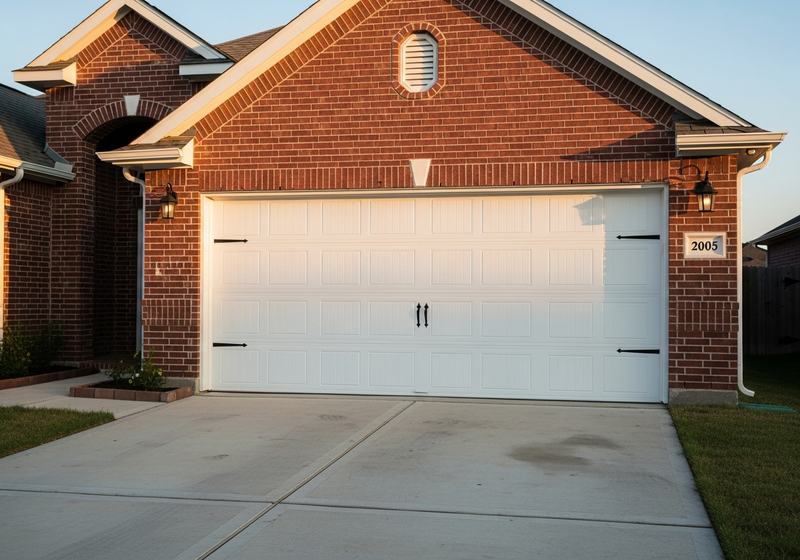
Composite doors deliver the wood look without the schedule. A textured overlay of wood-fiber composite or polymer is bonded to a steel or foam-core base, stained or painted, and finished with strap hinges and handles. It does not swell, rot or rust, it insulates well, and the base underneath is usually a good steel door in its own right. In carriage house styles, composite has become the default on the brick and stone elevations in the city's newer master-planned sections.
Want to see samples on your own driveway?
We bring steel and composite samples, measure the opening, check your opener and quote in writing. No charge, no pressure.
What We Recommend for Sugar Land
For most houses, a 25 or 24 gauge galvanized steel door with injected polyurethane insulation, a good bottom seal and galvanized hardware behind it. It handles the humidity, the heat and the occasional storm, needs almost nothing from you, and comes in for roughly $1,400 to $3,500 installed depending on size, windows and finish.
Where a wood look is wanted, a composite carriage house door on a steel base is the version we install most. Our garage door installation page covers what is included and how a measure and quote works.
Three local checks before you order. First, the architectural guidelines in the master-planned communities cover door color, panel style and window layout, so read your covenants before falling for a design. Second, wind rating. Fort Bend County is outside the Texas Windstorm Insurance Association zone, so no windstorm certificate is required here, but a wind-rated version of the door you have chosen is a sensible upgrade, and our guide to preparing a garage door for hurricane season explains why. Third, weight. Insulated, glass and wood doors are all heavier than the single-skin door they replace, and the new door needs springs sized to it and an opener with enough capacity, which is why we check both in our spring and opener work before hanging anything. The city's permits and inspections page covers what the city itself requires.
Whichever material you land on, the hardware behind it decides how quiet and how long lived the door is. Sealed nylon rollers and a belt drive opener make an insulated door nearly silent, which our guide on how to quiet a noisy garage door goes through in detail. And if you are still deciding between repairing the old door and replacing it, our main page on garage door repair in Sugar Land, TX lays out what each repair costs so you can compare honestly.